

Some heart conditions are invisible until it's too late.
Coronary heart disease affects millions of Americans. Heart disease is the #1 cause of death and disability in the U.S. Early detection is the key to treating heart disease and improving quality of life. Over the past few years, Cardiac PET imaging has emerged as the best non-invasive method for detecting and evaluating heart disease.
The Cardiac PET Alliance is committed to protect this crucial and unique diagnostic imaging modality. We're fighting to protect patient access to Cardiac PET.
We're here to make sure it stays protected.
"Once You Join...There's No Going Back."
— Dr. Toniya Singh
An accurate diagnosis can save a life.
Coronary microvascular disease is real and more common than most people realize. For decades, it was nearly impossible to detect without invasive procedures, leaving millions of patients, including many women, Blacks, and those in rural communities, dismissed or misdiagnosed.
Cardiac PET changed that.
Cardiac PET uses a combination of nuclear/molecular imaging with advanced computed tomography to determine the presence, location and severity of a patient’s heart disease. Cardiac PET imaging is non-invasive, with a low amount of radiation, and can be done in the convenient setting of a cardiologist’s office (no hospitalization needed). It can be done within a few hours.
Because of its unique molecular and cellular level imaging capabilities, Cardiac PET can identify several forms of heart disease including epicardial coronary artery disease (blockages within the large vessels of the heart), microvascular heart disease (blockages within the smaller vessels of the heart), blood flow within the heart muscle, cellular level function, tissue viability, and more. Note: Cardiac PET imaging is the most reliable and evidence-based non-invasive test for detecting and evaluating microvascular heart disease., a condition that disproportionately affects women and Blacks. Through mobilizing the equipment, Cardiac PET imaging can be offered to remote, rural and underserved communities.
The Cardiac PET Alliance is a coalition of cardiologists, imaging specialists, healthcare partners, and patients committed to making sure that access to Cardiac PET is protected for every patient who needs it.
This is what's at risk.
Cardiac PET is an emerging technology, with expanding clinical applications that could have a profound impact on how heart disease is detected, managed, and treated across entire patient populations.
Beyond its established role in diagnosing coronary artery disease and coronary microvascular dysfunction, cardiac PET now has validated applications for cardiac sarcoidosis, cardiac amyloidosis, and the evaluation of inflamed atherosclerotic plaques — so-called "vulnerable" or "hot" plaques — that may predict heart attacks before they occur. New cardiac tracers, including Flyrcado and 18F-NaF, are on the market and in active clinical trials. And new evidence continues to confirm cardiac PET as the superior noninvasive test for conditions no other imaging modality can reliably detect.
We support CMS's recently published, proposed change under the OPPS to move cardiac PET to an APC 4 classification. This change will create long-term stability and certainty within the Medicare reimbursement system thus enabling appropriate utilization and expansion of cardiac PET imaging within the hospital outpatient, IDTF, and physician office settings. Furthermore, we request cardiac PET CPT codes continue to be "carrier priced" with the recently proposed OPPS APC 4 pricing as the relevant reference point for the MACs.
The patient access stakes are real, particularly for women, Black patients, and those in rural and underserved communities, who are disproportionately affected by coronary microvascular disease and who depend most on the community-based programs and mobile units that deliver cardiac PET closest to where they live.
These programs require substantial capital investment to operate: scanners and the requisite software & workstations cost over $1 million, construction and lead-shielding cost another $300K-$500K, additional electricity supply to support the PET/CT scanner costs $100K-$200K, plus significant ongoing costs for rubidium and other isotopes, specialized technologists, and equipment maintenance. Reimbursement cuts make that model unviable, and when community practices become financially unviable, they consolidate into hospital systems. Published research has shown that consolidation consistently raises costs for Medicare and for patients, while concentrating access in large institutional settings that are harder to reach.
For many of these patients, there is no other option.
We're building a coalition of cardiologists committed to protecting access to Cardiac PET. Please join us!
Join the Alliance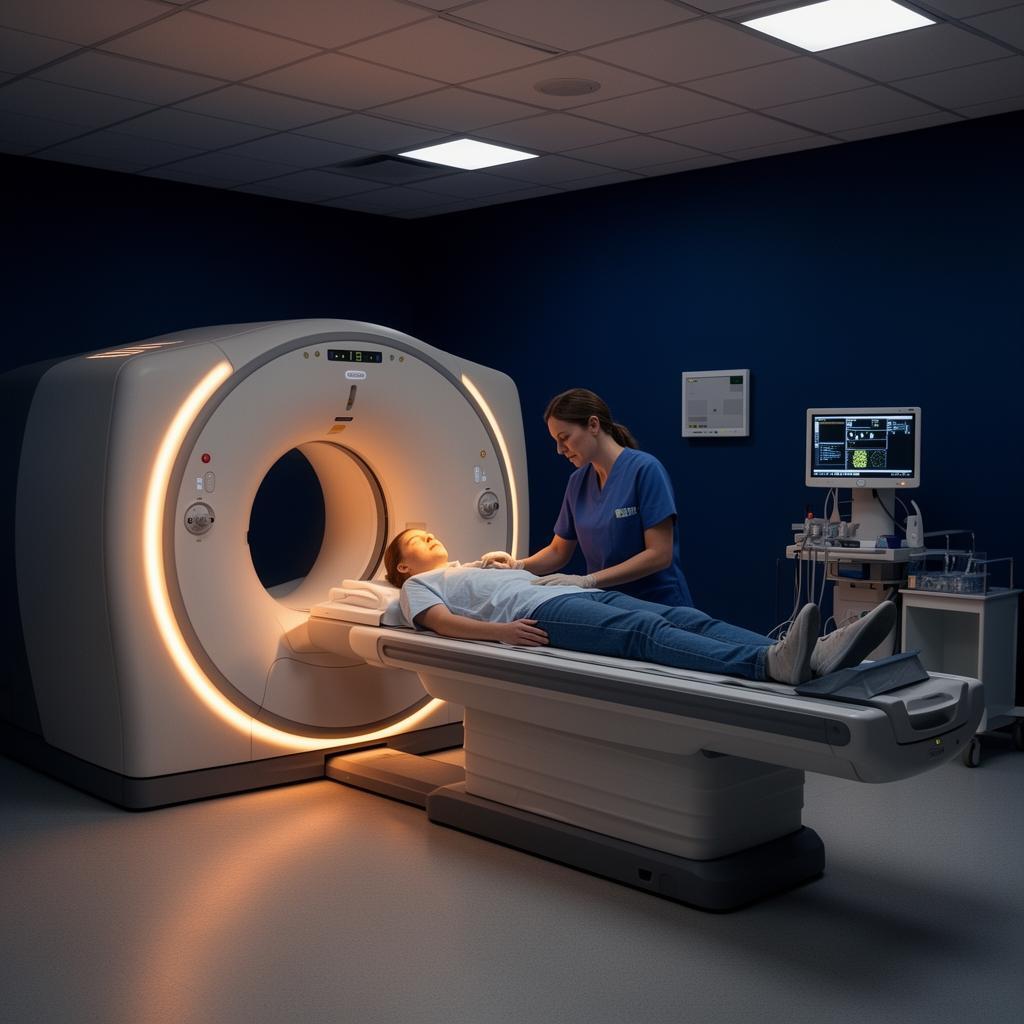
Backed by Decades of Research.
Clinical guidelines from the American Society of Nuclear Cardiology and the European Society of Cardiology, peer-reviewed studies, and physician expertise all point to the same conclusion: Cardiac PET saves lives.
Explore the ScienceAn Alliance Built to Last
The Cardiac PET Alliance brings together leading cardiology practices and cardiologists committed to one goal: protecting patient access to advanced cardiac care offered by Cardiac PET imaging for every patient, all genders, all ethnicities, and in every community.
Every patient deserves an answer.
Dr. Lauren Frost
MyCardiologist
Non-Invasive Cardiologist
"PET Stress Test Has Really Become The Answer”
Dr. Richard Allen Williams
Association of Black Cardiologists
Cardiologist, Founder of ABC
"There is a reason to bring this wonderful Cardiac PET paradigm into usage, so that the people who need it can get it."
Tonya Casey
CV Health Clinic
Chief Operating Officer
"Geography shouldn't determine whether someone gets accurate cardiac diagnosis"
Dr. Abbe Rosenbaum
MyCardiologist
Clinical Cardiologist
"PET Stress testing has radically improved our ability to diagnose and treat cardiovascular disease in women."
Join the Alliance
Add your voice to the coalition fighting for patient access.
Share Your Story
Help others understand why cardiac PET matters.
Contact Us
Reach out to learn more or get involved.
Email: pfoster@cardiacpetalliance.com
Contribute to Cardiac PET PAC
Support the PAC advocating for reimbursement.